


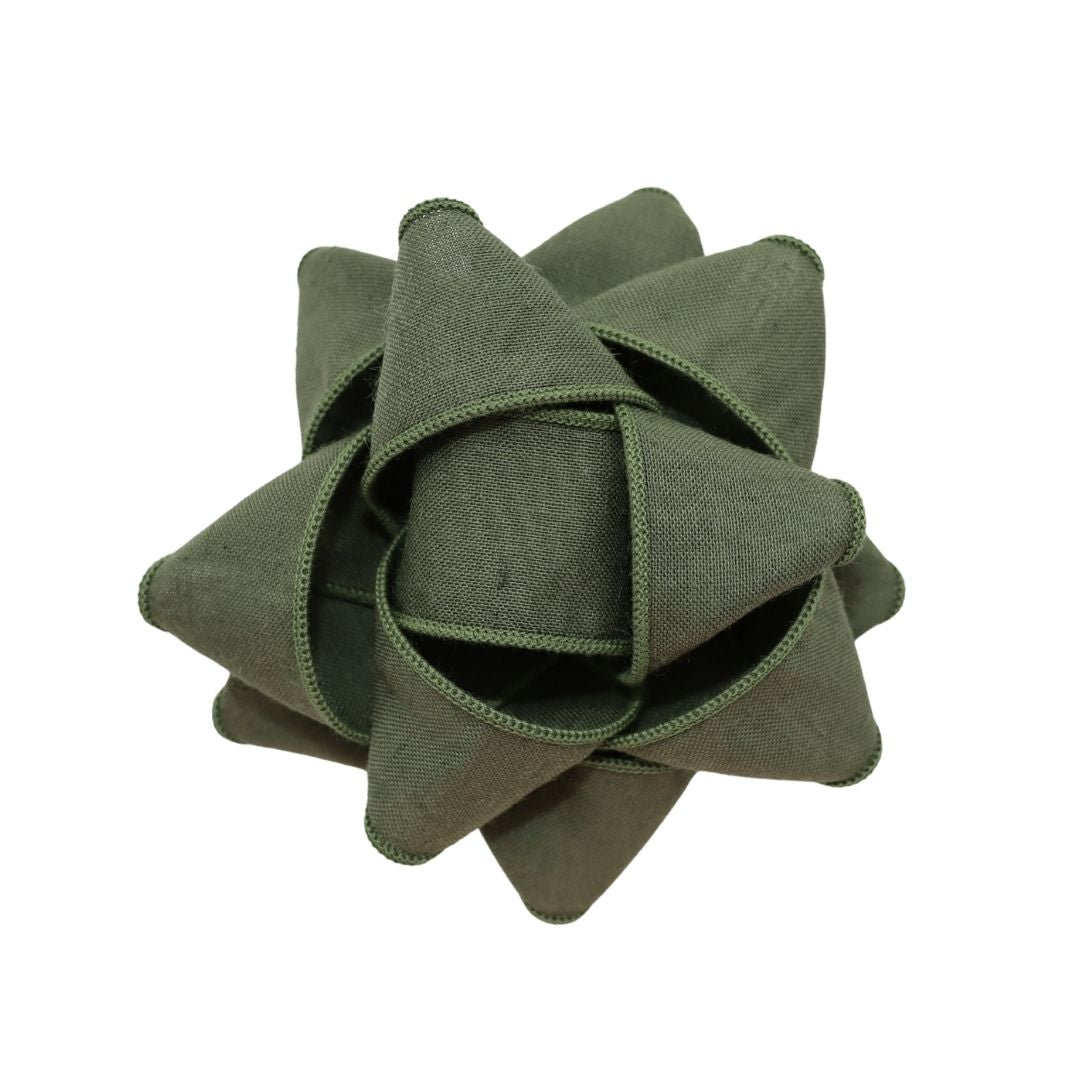





Recycling has become essential in today’s world. But why recycle a material that still has so much potential? That is the principle behind textile recovery, known as textile salvaging at Next Chance. Rather than breaking down a material to transform it, the goal is to preserve its value and potential by giving it a second life without recycling it.
Recycling vs. Salvaging: What’s the Difference?
Every October in Canada, Circular Economy Month encourages us to rethink our relationship with resources. To mark the occasion, Next Chance is revisiting the very essence of its story: textile salvaging.
First, it is important to understand that textile recovery takes place long before a material becomes waste, whereas recycling comes into play afterward. Recycling involves transforming waste into a new raw material. While this process is valuable, it generally requires energy, water, industrial processing and, in some cases, the addition of virgin fibres to maintain fabric quality.
Unlike recycling, textile recovery involves saving an existing material that is destined to be discarded, destroyed or left unused. Textile salvaging therefore makes it possible to:
- Preserve existing resources by maintaining the properties and quality of materials.
- Reduce energy and water consumption by avoiding certain industrial processing steps.
- Extend the lifespan of textiles by giving them a new purpose.
Reduce waste generation by intervening before materials are discarded.
From an environmental perspective, it is generally preferable to prioritize recovery and reuse before recycling.
How Does Textile Salvaging Work at Next Chance?
At Next Chance, the company has made a conscious choice to adopt textile recovery as its sourcing model, a practice referred to internally as textile salvaging, in order to create products that are as environmentally responsible as possible.
The company sources post-industrial textile surplus: new fabrics discarded during the fashion industry's production process, including end-of-roll fabrics and offcuts. This is the first step in textile salvaging. “We visit local manufacturers and designers, primarily in the Greater Montreal area, and rescue surplus materials to give them a second life,” explains Maude, co-founder of Next Chance.
Next comes the sorting stage. “At our warehouse, we carefully sort textiles to make the most of every recovered fabric. Whenever possible, we also find new uses for our own fabric offcuts. For example, our Christmas ornaments are stuffed with small fabric scraps left over from other products,” explains Gabrielle, co-founder of Next Chance.
Once the fabrics have been sorted, the collection development process begins. At Next Chance, every fabric is considered salvageable. “It’s up to us to find creative ways to give these materials a second life through the design work we do in-house,” explains Maude. Based on the characteristics and quantities of available fabrics, each material is creatively allocated to specific product lines or collections.
Finally, the production stage begins. The fabrics are cut, assembled and sewn into new products. All offcuts generated during Next Chance’s production process are kept and reintegrated into the next sorting cycle.

Textile Upcycling: A Practice That Is Still Far Too Rare?
Today, recycling is far more widespread than textile recovery. When companies communicate about the circular economy, they often highlight recycled textiles, recycled fibres, recycled polyester or recycled cotton. Yet, from an environmental perspective, recovering and reusing existing materials is considered a priority over recycling.
The scale of the issue is clear: the amount of textile waste disposed of in Québec increased by 114% over 12 years, reaching 344,000 tonnes in 2023, according to RECYC-QUÉBEC.
This concerning figure reinforces Gabrielle and Maude’s determination to continue their efforts and take their mission even further. “Our biggest dream would be to develop a product line that allows us to salvage post-consumer textiles: clothing that has been worn, curtains or cushions that have already been used,” says Gabrielle.
While recycling has an official statistical category, textile recovery and upcycling remain emerging practices that are still insufficiently documented. More than just an approach, textile salvaging reflects the way Next Chance sees materials: every fabric deserves a second life.
Next Chance’s vision is part of a much broader commitment: rethinking the way we produce and consume by placing social and environmental impact at the heart of the business. Since October, Next Chance has been proud to hold B Corp certification, an internationally recognized designation that distinguishes for-profit companies meeting rigorous standards for social and environmental performance, transparency and accountability.

To discover Next Chance products, click here.
